
Steady Path Motorcycle Trial
Reviews
Description
Core Gameplay Philosophy
Unlike conventional racing titles that prioritize speed, this experience focuses on careful navigation and steady progress. Each course presents a series of physical challenges that require players to read the terrain and adjust their approach. The motorcycle responds to subtle inputs, making every movement matter. Riders must learn when to accelerate and when to ease off the throttle to maintain control. This design encourages a thoughtful play style where patience often yields better results than aggressive driving.
Track Design and Obstacles
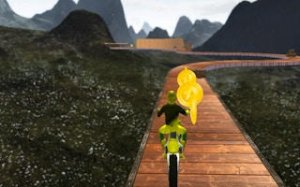
The courses feature a variety of elements that test different aspects of control. Ramps require building enough speed to clear gaps without overshooting the landing zone. Narrow beams demand slow, deliberate movement to keep the bike upright. Steep climbs need careful momentum management to avoid tipping backward. Each track is laid out to create a unique sequence of these obstacles, forcing players to adapt their technique continuously. The layouts are structured so that memorizing the terrain becomes part of the challenge.
Physics and Handling Model
The driving engine simulates realistic weight transfer and traction. When the bike leans, the player must counter-steer to correct its path. Accelerating too quickly on loose surfaces can cause the rear wheel to spin, while braking abruptly may pitch the rider forward. Understanding how the motorcycle behaves under different conditions is essential for consistent runs. The physics system rewards smooth inputs and penalizes jerky movements, reinforcing the game's emphasis on precision over raw power.
Progression and Skill Development
As players advance, they encounter increasingly complex courses that combine multiple obstacle types in tighter sequences. Early tracks introduce basic elements like gentle slopes and wide beams, while later ones feature sharp turns, narrow ledges, and steeper gradients. This gradual increase in difficulty allows riders to build muscle memory and refine their timing. There is no penalty for restarting a course, which encourages repeated attempts and learning from mistakes. The satisfaction comes from mastering each section and completing a clean run.
Visual Clarity and Feedback
The clean 3D graphics provide a clear view of the terrain ahead, helping players plan their path. The camera angle stays behind the bike, offering a good sense of depth and distance. Visual cues, such as changes in surface texture or the angle of a ramp, give hints about what approach might work best. The interface is minimal, keeping the focus on the driving experience. This straightforward presentation helps players concentrate on the core task of balancing and navigating without distractions.






Player Comments
Sign in to comment
You must be logged in before posting a review or rating.
No account? Create one
No comments yet. Be the first to comment!